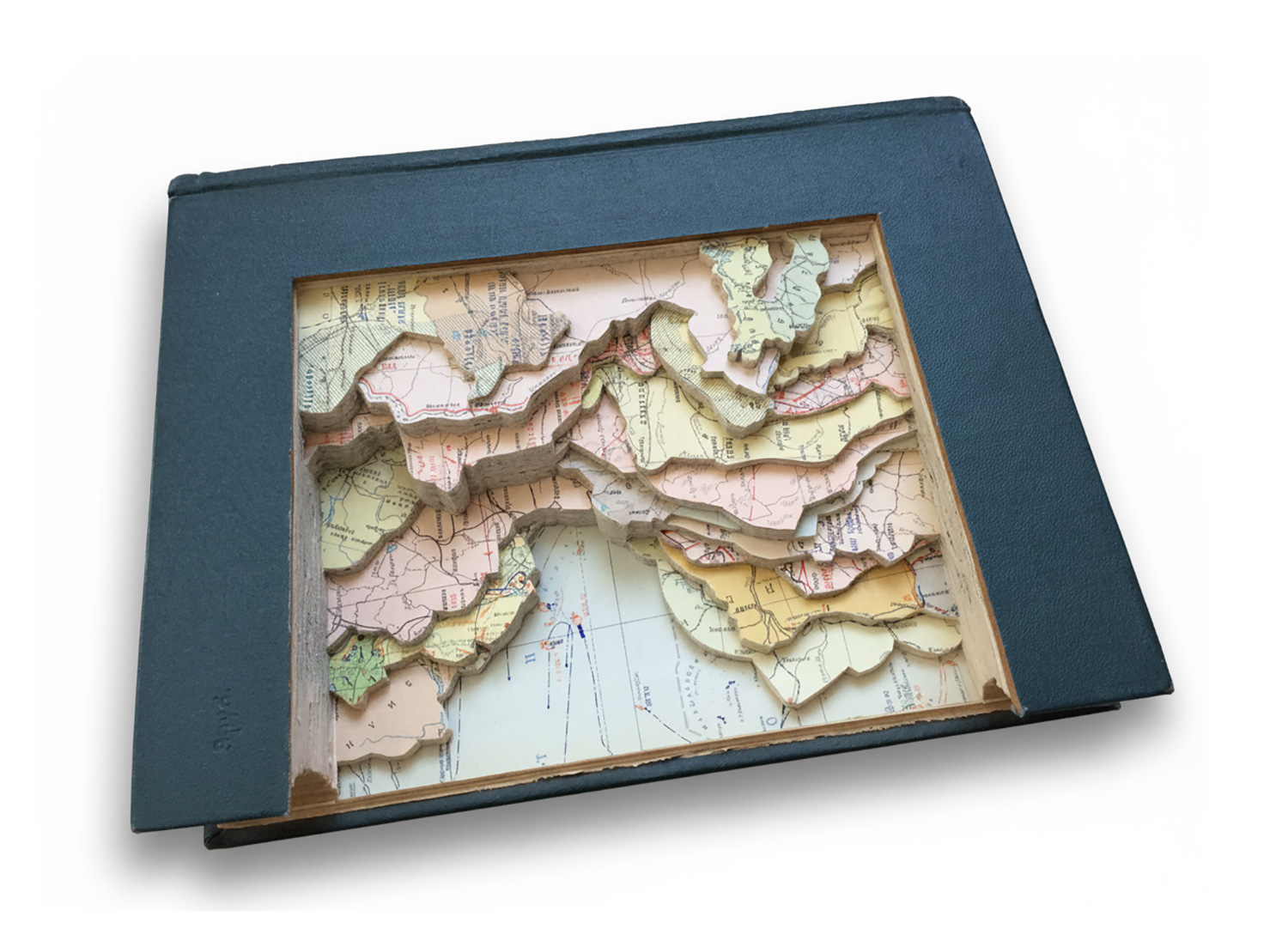
The excavated volume turns a static historical account into a shifting terrain. By carving through the book’s 688 pages, the flat maps collapse into a layered landscape—mountainous, fractured, almost geological—echoing the way wars sediment themselves into collective memory. Borders buckle, regions fold into one another, and once-straight lines become unstable contours.
The piece suggests that history is never a single surface to be read but a depth to be dug into: a stratified archive of decisions, erasures, and consequences. What survives in the exposed cavity is not a clear cartography of war but its aftermath—terrain reshaped by trauma, time, and the impossibility of a single, authoritative narrative.