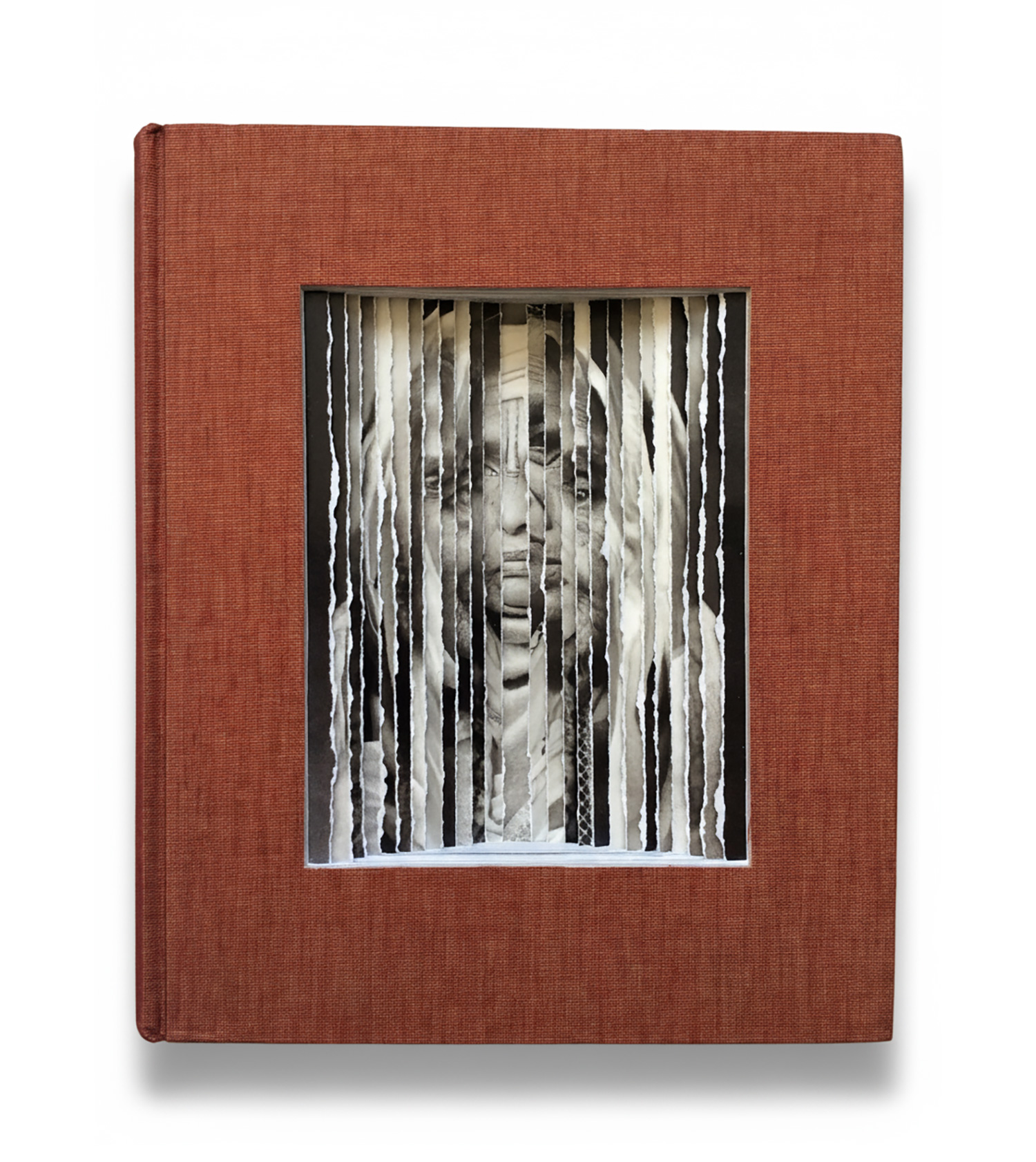
Moksha is carved from a book of black-and-white portraits, reshaped only with hand tools that gradually open space within the dense sequence of faces. As the layers are removed, the images begin to meet across the depth of the paper—figures once separated by page numbers now share the same field of vision. The result is a slow unfolding in which each portrait contributes to a larger, composite presence emerging from within the book.
Importantly, none of the pages are displaced. Every photograph remains in its original printed position; there is no glue, tape, or reassembly. The book can still be held, opened, and flipped through in the order it was meant to be read. Yet the act of turning the pages now reveals not a linear progression, but a series of openings that allow glimpses forward and backward at once.
Through this carved corridor of images, the work creates a quiet sense of passage — a movement from one state of visibility to another — where individual identities remain intact yet become part of a shared inner structure shaped by the book’s depth.